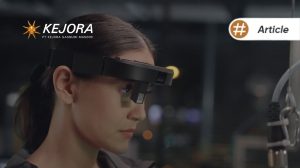
Assisted reality for frontline industrial work is no longer an emerging concept—it is rapidly becoming a core operational requirement. Industries such as oil and gas, mining, manufacturing, utilities, and energy infrastructure rely on frontline workers who operate in hazardous, complex, and time-critical environments. These workers must access information, collaborate with experts, and execute procedures accurately—often with both hands occupied and safety as the top priority.
Traditional mobile devices such as smartphones and tablets are poorly suited to these environments. They require hands-on interaction, are difficult to use with gloves or PPE, and often fail in noisy, dusty, or hazardous locations. As a result, critical knowledge remains disconnected from the point of work.
This is where RealWear delivers a major breakthrough with RealWear Arc 3. Purpose-built for industrial environments, RealWear Arc 3 redefines assisted reality for frontline industrial work by combining rugged hardware, hands-free operation, and seamless digital connectivity—empowering frontline teams to work safer, faster, and smarter.
Table of Contents
Why Assisted Reality Is Critical for Frontline Industrial Operations
Frontline industrial work presents unique challenges.
The Reality of Industrial Frontline Work
Frontline workers often face:
- Hazardous and remote environments
- High noise levels and poor lighting
- Strict safety and compliance requirements
- Complex procedures and equipment
In these conditions, access to real-time information and expertise can mean the difference between success and failure.
The Cost of Disconnected Frontline Teams
Without effective assisted reality tools:
- Workers rely on memory or paper manuals
- Remote experts cannot see field conditions
- Errors, rework, and downtime increase
Assisted reality for frontline industrial work bridges this gap by bringing digital intelligence directly into the worker’s line of sight.
Limitations of Traditional Digital Tools in the Field
Despite digital transformation efforts, many tools fall short at the frontline.
Smartphones and Tablets Are Not Hands-Free
Handheld devices:
- Require stopping work to interact
- Increase safety risk
- Are difficult to use with gloves or PPE
Consumer AR Is Not Industrial AR
Many AR solutions are:
- Designed for offices or retail
- Not ruggedized for industrial use
- Incompatible with PPE and safety helmets
Real frontline environments require purpose-built assisted reality solutions.
What Assisted Reality for Frontline Industrial Work Really Means
Assisted reality is not about immersive visuals—it is about practical support.
Read More: Kejora Gasbumi Products
Information Without Distraction
Assisted reality delivers:
- Contextual information in a small display
- Voice-controlled interaction
- Minimal cognitive load
Designed for Work, Not Entertainment
RealWear Arc 3 focuses on clarity, safety, and efficiency—not visual overload.
Introducing RealWear Arc 3
RealWear Arc 3 represents the next evolution of industrial assisted reality.
Purpose-Built for Industrial Frontline Workers
RealWear Arc 3 is designed to:
- Mount securely with safety helmets
- Operate reliably in harsh environments
- Integrate seamlessly with industrial workflows
Hands-Free, Voice-Driven Operation
Using advanced voice control, workers can:
- Navigate instructions
- Communicate with experts
- Capture images and video
All without removing gloves or stopping work.
Redefining Safety Through Assisted Reality
Safety is the top priority in industrial operations.
Keeping Eyes Up and Hands Free
Assisted reality for frontline industrial work ensures:
- Workers maintain situational awareness
- Both hands remain free for tasks
- Reduced risk of accidents
Supporting Compliance and Procedures
RealWear Arc 3 enables:
- Step-by-step guided workflows
- Real-time verification of tasks
- Digital records for audits and compliance
Improving Productivity at the Point of Work
Productivity gains come from eliminating friction.
Faster Task Execution
With RealWear Arc 3, workers:
- Access instructions instantly
- Avoid returning to control rooms
- Resolve issues on the first attempt
Reducing Downtime and Delays
Assisted reality enables:
- Faster troubleshooting
- Immediate expert guidance
- Fewer repeat visits
Enabling Remote Expert Collaboration
One of the strongest benefits of assisted reality is remote support.
See-What-I-See Collaboration
Using RealWear Arc 3, remote experts can:
- See the worker’s field of view
- Provide real-time guidance
- Annotate and instruct visually
Reducing Travel and Operational Cost
Remote collaboration:
- Reduces expert travel
- Speeds up issue resolution
- Improves workforce scalability
Use Cases Across Industrial Sectors
Assisted reality delivers value across industries.
Oil and Gas Operations
RealWear Arc 3 supports:
- Field inspections
- Maintenance and repairs
- Safety checks and audits
Manufacturing and Industrial Plants
Applications include:
- Equipment installation
- Quality assurance
- Changeover and setup
Utilities and Energy Infrastructure
Frontline teams use assisted reality for:
- Network inspections
- Fault isolation
- Emergency response
Designed for Harsh Industrial Environments
Durability is non-negotiable.
Rugged and Reliable Hardware
RealWear Arc 3 is built to withstand:
- Dust, water, and vibration
- High and low temperatures
- Continuous daily use
Compatible with PPE and Safety Standards
The device integrates with:
- Helmets and safety gear
- Hearing protection
- Industrial compliance requirements
Integrating Assisted Reality into Digital Workflows
Technology must fit existing operations.
Seamless Integration with Enterprise Systems
RealWear Arc 3 integrates with:
- Remote assistance platforms
- Digital work instruction systems
- Asset management and maintenance software
Scalable Across the Organization
Assisted reality can be deployed:
- Across sites and regions
- For multiple roles
- Without major infrastructure changes
Business Impact of Assisted Reality for Frontline Industrial Work
The benefits extend beyond individual tasks.
Improved Operational Efficiency
Organizations achieve:
- Faster task completion
- Fewer errors and rework
- Higher first-time fix rates
Stronger Knowledge Retention
Assisted reality helps:
- Capture expert knowledge
- Train new workers faster
- Reduce dependency on a few specialists
Industry Perspective on Assisted Reality
Assisted reality is increasingly recognized as a frontline technology standard.
External DoFollow references:
- Gartner – Frontline worker technology trends
- McKinsey – Digital tools for frontline productivity
These perspectives highlight the role of hands-free digital tools in modern industrial operations.
Why RealWear Arc 3 Sets a New Standard
Not all assisted reality solutions are equal.
Designed for Frontline Reality, Not the Office
RealWear Arc 3 stands out because it is:
- Voice-first
- Safety-focused
- Built exclusively for industrial use
Proven in Real-World Industrial Deployments
RealWear technology is trusted globally across:
- Energy and oil & gas
- Manufacturing
- Mining and utilities
Conclusion
Frontline industrial work demands tools that respect the realities of the job: safety, complexity, and urgency. Assisted reality for frontline industrial work delivers exactly that—when implemented with the right technology.
By combining rugged design, hands-free operation, and real-time collaboration, RealWear Arc 3 redefines how frontline teams access information and expertise. It transforms disconnected field work into connected, intelligent operations.
Bring Assisted Reality to Your Frontline Operations
Successfully deploying assisted reality for frontline industrial work requires both the right technology and experienced local support. Kejora Gasbumi Mandiri works closely with industrial organizations to implement RealWear Arc 3 in ways that deliver real operational impact.
From solution design and pilot projects to deployment, training, and ongoing support, Kejora helps organizations unlock the full value of assisted reality using RealWear Arc 3.